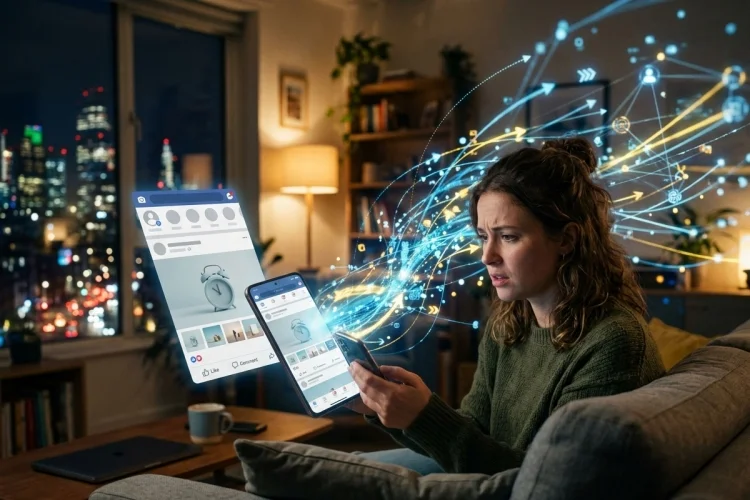
You open social media and see a surprising post: a popular food supposedly causes a serious disease, a celebrity has apparently died, or a new law will suddenly change everyone’s daily life. Within hours, thousands of people have shared the claim.
A few hours later, you discover that it was wrong.
This is a common example of misinformation, and understanding how it works has become an essential part of media literacy.
UNESCO defines misinformation as false information shared without an intention to cause harm. Someone passing it along may genuinely believe that the information is accurate or helpful.
The internet did not create inaccurate rumors, but digital communication allows them to travel much faster and reach much larger audiences. Social media, emotional reactions, repetition, confirmation bias, and our natural desire to share interesting information can all contribute.
So why does misinformation spread so quickly, sometimes even faster than accurate information? The answer involves both technology and ordinary human behavior.
What Is Misinformation?
Misinformation is information that is false, inaccurate, or misleading but is shared without necessarily intending to deceive people.
Imagine receiving a message from a friend saying that a local supermarket will close permanently tomorrow. Your friend honestly believes the message and forwards it to help you prepare.
Later, the supermarket confirms that the rumor is false.
Your friend did not deliberately lie. They simply shared incorrect information.
That is misinformation.
It can appear as inaccurate statistics, misleading health advice, outdated photographs, false quotations, incorrect breaking news, edited videos, or rumors presented as facts.
Importantly, misinformation does not always contain information that is completely fabricated. Sometimes a real photograph is attached to the wrong event.
A genuine statistic might be missing important context. An old news story may be reposted as though it happened yesterday.
This makes misinformation harder to recognize because a piece of truth can sometimes be mixed with something misleading.
Misinformation vs. Disinformation: What Is the Difference?
Misinformation and disinformation are often discussed together, but intention separates them.
Misinformation is generally false information shared without an intention to mislead.
Disinformation involves false or misleading information deliberately created or distributed to deceive or manipulate people.
UNESCO uses this distinction, describing disinformation as deliberate dissemination intended to deceive, while misinformation is commonly shared without harmful intent.
Suppose someone creates a fake screenshot claiming that a politician made a statement they never made. If the creator knowingly fabricated it to deceive people, that is disinformation.
Someone else may see the screenshot, assume it is genuine, and forward it to friends. That person may now be spreading misinformation.
The same false claim can therefore move from deliberate deception to accidental sharing.
From the reader’s perspective, however, both can cause harm. The safest approach is to evaluate important information before passing it along, regardless of why it was originally created.
Emotional and Surprising Stories Are Highly Shareable
One reason false information travels quickly is simple: interesting stories are easy to share.
Imagine two headlines:
“Researchers Continue Studying Effects of Common Food Additive”
and
“Doctors Shocked: Everyday Ingredient Could Be Destroying Your Health”
Which one are you more tempted to click?
The second headline creates fear, curiosity, and surprise.
Research from MIT provides a famous example of this effect. Researchers examined around 126,000 news stories shared on Twitter by roughly 3 million people between 2006 and 2017.
They found that false stories traveled farther, faster, deeper, and more broadly than truthful ones. Falsehoods were about 70% more likely to be retweeted in that dataset.
The researchers also found that false information tended to be more novel. Replies to false stories showed more expressions of surprise and disgust, suggesting that novelty and emotional reactions may partly explain why people share them.
The lesson is practical: if a post produces an immediate emotional reaction, that is a good moment to slow down rather than hit “share.”
Social Media Makes Sharing Almost Effortless
Rumors once had to travel through conversations, letters, newspapers, or other relatively slow communication systems.
Today, one tap can distribute information to hundreds or thousands of people.
That convenience is incredibly useful when the information is accurate. Emergency alerts, scientific discoveries, public announcements, and breaking news can travel quickly.
But the same infrastructure works for false information.
WHO notes that increased digitization, social media, and internet use allow information to spread rapidly while also potentially amplifying harmful or misleading messages.
Think about a family group chat.
One person receives an alarming health warning and forwards it to ten people. Several of them send it to other groups. Within a short period, hundreds of people may see a claim that nobody in the chain has actually verified.
Sharing requires seconds.
Fact-checking requires effort.
That difference gives misinformation a natural speed advantage.
Repetition Can Make False Claims Feel True
Another reason misinformation is difficult to fight is that repeated information can start feeling familiar.
And familiarity can be mistaken for truth.
Psychologists sometimes call this the illusory truth effect. Repeated exposure to a statement can increase the likelihood that people judge it as true, even when the statement is inaccurate.
The American Psychological Association notes that repetition of false claims can increase belief in them.
More recent psychological research has also found that previously seen statements can be rated as more truthful, particularly when people chose to engage with the topic themselves.
This helps explain why constantly repeating a rumor can be harmful.
Imagine seeing the same false health claim on TikTok, Facebook, YouTube, and several blogs.
You may start thinking:
“I’ve heard this everywhere, so there must be something to it.”
But five posts are not necessarily five independent sources.
They may all originate from the same inaccurate claim.
Repetition creates familiarity. It does not create evidence.
Confirmation Bias Makes Comfortable Stories Easier to Believe
People are not perfectly neutral information-processing machines.
We have beliefs, experiences, loyalties, fears, and expectations.
Confirmation bias describes our tendency to notice or accept information that fits what we already believe while being more skeptical of information that challenges us.
Suppose you already distrust a particular company.
A viral post accusing that company of wrongdoing may immediately seem believable, even before you examine the evidence.
If another post defends the company, you may examine every detail looking for weaknesses.
The problem is not limited to politics. Confirmation bias can influence how we respond to information about health, parenting, technology, diet, celebrities, money, sports, and countless other subjects.
One useful test is to ask yourself:
“Would I believe this as quickly if it supported the opposite viewpoint?”
If the answer is no, pause and investigate.
Strong media literacy means applying similar standards of evidence to information we like and information we dislike.
Algorithms and Online Communities Can Amplify Exposure
Digital platforms also influence which information we encounter.
Recommendation systems may consider what we watch, click, like, search for, or interact with when deciding what content to show next.
This personalization can be convenient. Someone interested in photography may enjoy seeing more photography content.
However, repeated exposure to similar viewpoints can make certain claims appear more widespread than they really are.
Online communities can reinforce this effect.
If nearly everyone in a group shares similar beliefs, questionable information that supports those beliefs may circulate with little challenge. A post may receive hundreds of supportive comments, creating the impression that the claim is obviously correct.
The OECD warns that rapid proliferation of misinformation and disinformation in today’s interconnected digital environment can undermine trust, contribute to polarization, and interfere with informed decision-making.
Popularity should therefore never be treated as proof.
A million views tell you that content traveled widely-not that it is accurate.
Why Misinformation Can Cause Real-World Harm
Misinformation may sometimes seem harmless, especially when it involves celebrity gossip or silly internet rumors.
But inaccurate information can have serious consequences.
Health misinformation can influence decisions about treatments and preventive care. Financial rumors can affect investment choices. False emergency warnings may create panic. Election misinformation can distort understanding of democratic processes.
WHO uses the term infodemic to describe an overabundance of information, including false or misleading material, during disease outbreaks.
It warns that such conditions can create confusion, encourage risky behavior, damage trust in health authorities, and make effective public-health communication more difficult.
Misinformation can also harm individuals.
A falsely attributed statement may damage someone’s reputation even after it is corrected. Unfortunately, corrections may never reach everyone who saw the original claim.
That is another reason prevention matters.
It is easier to pause before sharing misinformation than to completely retrieve it once it has spread.
How to Slow Down the Spread of Misinformation
You cannot personally remove every false claim from the internet, but you can avoid becoming part of the distribution chain.
Start with one simple habit:
Pause before sharing.
If something sounds shocking, investigate the original source. Search for independent reporting rather than trusting screenshots or reposts.
Check the date. Old stories are regularly presented as new events.
Look for evidence behind statistics and scientific claims. If someone says “research proves” something, try to locate the actual research.
When dealing with images and videos, search for their original context. Genuine visuals can still be misleading when paired with false captions.
Most importantly, do not share something merely because it matches your beliefs.
UNESCO identifies media and information literacy-including critically accessing, analyzing, and evaluating content-as an important way to help people recognize misinformation and make informed decisions in complex digital environments.
Misinformation is false or misleading information that can be shared by people who genuinely believe it is true.
It spreads quickly because digital platforms make sharing effortless, surprising stories attract attention, emotional content encourages reactions, repetition creates familiarity, and confirmation bias can make comfortable claims easier to accept.
The good news is that everyone can help slow the cycle.
Before forwarding a dramatic post, pause for a moment. Find the original source, check the evidence, compare independent reporting, examine the date, and ask whether emotion is influencing your judgment.
You do not need to fact-check every joke or casual conversation. But when information could affect someone’s health, money, reputation, safety, or important decisions, take an extra minute to verify it before helping it travel further.