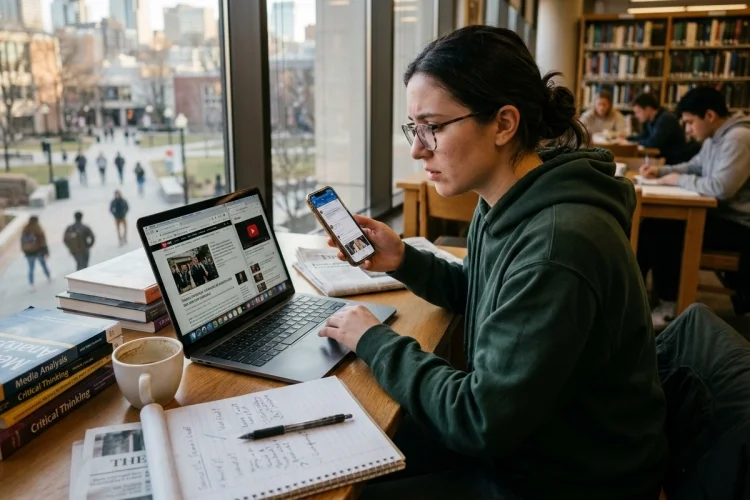
Every day, we scroll through hundreds of messages, headlines, videos, advertisements, social media posts, and search results.
Some are useful and accurate, while others may be misleading, biased, outdated, or completely false. The challenge is no longer simply finding information. It is knowing what information deserves our trust.
This is where media and information literacy becomes important. Often shortened to MIL, it is the ability to access, understand, analyze, evaluate, create, and share information responsibly across different forms of media.
UNESCO describes it as a collection of competencies that helps people critically engage with communication content, information providers, and digital technologies. You do not need to be a journalist, researcher, or technology expert to benefit from these skills.
Media and information literacy is useful when reading the news, researching a school assignment, watching a viral TikTok video, comparing products online, or deciding whether a message shared in a family group chat is actually true.
What Is Media and Information Literacy?
Media and information literacy combines several related abilities into one practical set of skills. At its simplest, it means knowing how to find information, understand it, question it, evaluate its reliability, and use it responsibly.
UNESCO explains that MIL includes the ability to access, analyze, critically evaluate, interpret, use, create, and distribute information and media content in creative, legal, and ethical ways.
The idea goes beyond learning how to operate a smartphone or search Google. You may know exactly how to use Instagram, YouTube, or a search engine while still struggling to recognize misleading information.
A media-literate person asks questions such as: Who created this content? Why was it created? What evidence supports the claim? Is something important being left out? Can the information be confirmed elsewhere?
These small questions can make a huge difference.
Media Literacy vs. Information Literacy
Media literacy and information literacy are closely connected, but they emphasize slightly different things.
1. Media Literacy
Media literacy focuses on understanding and evaluating messages delivered through television, newspapers, websites, advertising, movies, podcasts, social media, and other forms of communication.
For example, imagine watching a sponsored video in which an influencer claims that a particular product is “the best on the market.” Media literacy encourages you to notice that the creator may be paid to promote it and that the video has a commercial purpose.
2. Information Literacy
Information literacy focuses more strongly on finding, evaluating, organizing, and using information effectively.
Suppose you are researching whether drinking coffee has health benefits.
Instead of trusting the first website you find, information literacy encourages you to compare sources, examine the author’s expertise, look for research evidence, and check when the information was published.
UNESCO combines these abilities because modern media and information environments increasingly overlap.
Why Media and Information Literacy Matters Today
The internet has made information easier to access than at any previous point in history. However, easy access does not automatically mean accurate information.
Social media allows almost anyone to publish content instantly. A misleading post can therefore circulate widely before people have time to verify it.
Artificial intelligence can also generate realistic text, images, audio, and video, making source evaluation even more important.
The European Commission identifies critical thinking, evaluating information sources, and distinguishing opinion from fact as important parts of modern media literacy.
It also highlights challenges such as algorithmic amplification, social media influencers, disinformation, and manipulative uses of generative AI.
Media and information literacy helps people navigate this environment without becoming suspicious of everything they see.
The goal is not to assume that every source is dishonest. It is to develop the habit of asking for reasonable evidence before accepting important claims.
The Core Skills of Media and Information Literacy
One of the most important MIL skills is accessing information effectively. Instead of typing extremely broad questions into a search engine, a skilled user learns how to use specific keywords and identify appropriate sources.
The next skill is analysis. This means looking beyond what a message says and thinking about how it was constructed. Headlines, images, music, statistics, editing, and emotional language can all influence the way audiences interpret information.
Evaluation is equally important. Ask who published the information, whether the author has relevant expertise, what evidence is provided, and whether other credible sources support the claim.
Finally, MIL includes responsible creation and communication. If you publish an article, video, comment, or social media post, you become part of the information ecosystem yourself.
Responsible communication means respecting copyright, protecting privacy, avoiding deliberate deception, and correcting mistakes when necessary.
How to Evaluate Information Online
A useful habit is to avoid judging a source based only on how professional the website looks. Modern website templates make it possible for almost anyone to create convincing-looking pages.
Start with the author or organization. Search for information about who they are and what expertise they have. Then check when the content was published or updated because older information may no longer reflect current knowledge.
Next, examine the evidence. Reliable articles should make it possible to understand where important facts, statistics, or research claims originated.
You should also compare the claim with independent sources.
For example, imagine seeing a viral post saying that a common food has suddenly been “proven to cure” a serious illness. Instead of immediately sharing it, search for the original research and check information from established medical or scientific organizations.
Professional fact-checkers often use a similar strategy called lateral reading: instead of staying on one webpage and trying to judge it entirely from its appearance, they open other sources to investigate the organization, author, and claim.
Stanford’s Civic Online Reasoning work has developed educational materials around these kinds of online verification practices.
Understanding Misinformation and Disinformation
Another important part of media literacy is understanding why false information spreads.
Misinformation generally refers to inaccurate information shared without necessarily intending to deceive. Someone might share an incorrect health tip because they genuinely believe it is helpful.
Disinformation, by contrast, involves false or misleading information deliberately created or distributed to deceive people.
Both can cause problems.
One reason misleading content spreads easily is that people often react emotionally before checking the facts. A shocking headline or dramatic video may encourage immediate sharing.
Before reposting something surprising, check the source, read beyond the headline, investigate supporting evidence, and see whether reputable organizations are reporting the same information.
The International Federation of Library Associations and Institutions recommends similar verification habits in its guidance on spotting fake news, including checking the source, author, supporting evidence, and other reporting.
Algorithms, Social Media, and Information Bubbles
Media and information literacy also means understanding that the information appearing on your screen is not always random.
Social platforms and search engines use algorithms to decide what content to recommend. These systems may consider factors such as your previous searches, viewing history, clicks, interactions, and interests.
As a result, two people searching or browsing online may encounter very different information environments.
This can sometimes create an information bubble, where users repeatedly encounter similar ideas while seeing fewer opposing perspectives.
A simple way to reduce this effect is to deliberately consult multiple sources. Follow credible publications with different perspectives, read original documents when possible, and occasionally investigate viewpoints that challenge your existing assumptions.
Critical thinking does not mean automatically rejecting opinions you disagree with. It means examining the evidence behind them.
How to Practice Media and Information Literacy Every Day
Improving MIL does not require studying media theory for hours. Small daily habits are surprisingly powerful.
When you see an extraordinary claim, slow down before reacting. Check where it originated. Search for additional coverage and separate factual statements from opinions or speculation.
When reading statistics, ask what exactly was measured. A statement such as “90% of people agree” means very little unless you know who was surveyed, how many people participated, and how the question was asked.
You should also become more aware of your own biases. People naturally find information more convincing when it supports something they already believe.
Finally, practice responsible sharing. You do not need to forward every interesting post immediately. Taking an extra minute to verify something can prevent inaccurate information from spreading further.
Media and Information Literacy Is a Lifelong Skill
Media technology will continue to change. Today’s dominant platforms may eventually disappear, while new communication tools and AI technologies will emerge.
That is why media and information literacy should not be understood as a skill you learn once and finish.
UNESCO connects MIL with lifelong learning, digital citizenship, artificial intelligence, sustainable development, and the growing challenges created by misinformation and disinformation.
The specific platforms may change, but the fundamental questions remain useful: Who created this? Why? What evidence is available? Is the source trustworthy? Can I verify the claim somewhere else?
Those questions can help you navigate almost any future information environment.
Media and information literacy is essentially the ability to navigate today’s enormous information landscape with curiosity, awareness, and critical thinking.
It helps you find reliable information, recognize misleading content, understand how media messages influence audiences, and communicate responsibly.
You do not have to question every sentence you read or become a professional fact-checker. Instead, build simple habits: check the source, examine the evidence, compare different viewpoints, read beyond headlines, and pause before sharing questionable content.
The next time you encounter a surprising headline or viral post, give yourself one extra minute before believing or forwarding it. That small habit is one of the easiest ways to start becoming more media and information literate.